

Steak for one guest, curry for another, and a single bottle to choose: a wine and food pairing chart settles it by matching each dish’s weight and main flavour to a wine’s body, acidity, tannin or sweetness.
- Red meat and aged cheese: choose a tannic red such as Cabernet Sauvignon.
- Delicate fish: choose a fresh, light white. Meatier fish such as salmon can take a low-tannin red.
- Spicy or curried dishes: choose an off-dry Riesling.
The chart below turns those rules into a lookup by food type. For the principles behind every row, see how to pair wine with food.
How to read the chart
Each row names a dish, the wine style that suits it and the property doing the work. That property is almost always one of four: body, acidity, tannin or sweetness. The Brewery’s pairing guide describes good pairing as balancing these forces against the fat, salt, spice and sugar in the food.
- Body: a dish’s weight, meaning its richness, texture and intensity, should match the wine’s body. A heavy dish overwhelms a light wine, and a delicate dish is drowned by a full one.
- Acidity: found in wines such as Sauvignon Blanc, Riesling and many sparkling wines. It cuts through rich or fatty foods.
- Tannin: present in red wines, especially Cabernet Sauvignon, Syrah and Nebbiolo. Tannins grip protein, which is why they suit red meat and aged cheeses.
- Sweetness: off-dry wines, such as some German Rieslings, work with spicy food.
The Winemakers Show academy frames the same set as acid, tannin, alcohol and sweetness, and notes that classic rules help only up to a point. Treat every row as a reliable starting point, not a law. Sommo’s chart follows a similar logic, listing 35 dishes across 9 courses, each with three safe pours and one riskier pour. Safe pours suit a cautious host. The riskier pour suits a drinker who wants something less obvious.
Wine and food pairing chart by food type
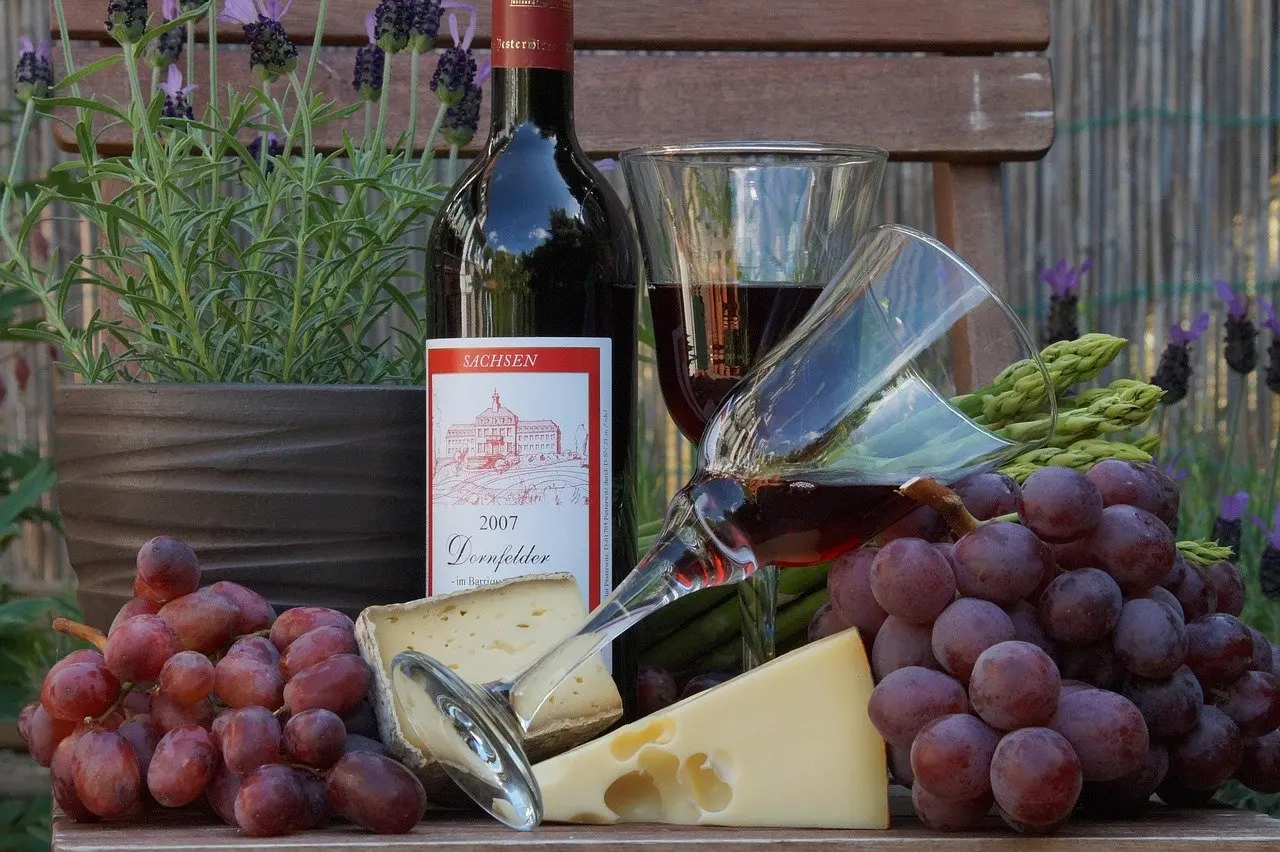
This chart covers the main wine styles in this guide: Cabernet Sauvignon, Pinot Noir, Chardonnay and Riesling, plus Albariño for delicate fish. Find the dish in the first column, then use the last column to decide whether the match suits your meal.
| Food | Wine style | What makes it work | Planning use |
|---|---|---|---|
| Steak | Cabernet Sauvignon | Firm tannin binds to protein and fat, and each softens the other bite by bite | The default red for red meat |
| Aged cheddar | Cabernet Sauvignon | Firm tannins and dark berry notes need food with enough weight | Serve with mature cheese, not delicate cheese |
| Duck | Pinot Noir | Enough perfume for the meat and enough acid for the fat | A lighter red option for rich poultry |
| Mushroom dishes | Pinot Noir | Light body and fine tannins | Good for vegetarian mains that need a red |
| Grilled salmon | Pinot Noir, lightly chilled | A silky, low-tannin red matches the weight of a meaty fish | Use when a white feels too light for the dish |
| Cod or sea bass | Albariño | Sea-spray freshness and stone fruit flatter delicate flesh | Pick for plainly cooked white fish |
| Lobster with herb butter | Chardonnay | Full body and creamy texture mirror the weight of the lobster | Choose for rich shellfish dishes |
| Roast chicken | Chardonnay (white Burgundy) | Buttery bird meets creamy-textured wine | A dependable choice for a family roast |
| Thai green curry | Off-dry Riesling | Slight sweetness tempers the spice while acidity keeps the palate refreshed | Reach for it when heat is the main feature |
| Chicken curry | Off-dry Riesling | A touch of sugar soothes the heat while acidity keeps the richness moving | Works for creamy, spiced sauces |
Rows draw on the Brewery pairing guide and Sommo’s pairing chart.
Red meat or fish: choosing by weight and tannin
For red meat, pick a tannic red. Tannins grip protein, so Cabernet Sauvignon, Syrah or Nebbiolo suit steak and aged cheese. The condition is weight: Cabernet’s firm tannins and dark berry notes demand food substantial enough to match, so a light dish makes the wine taste harsh.
For fish, the question is how delicate the flesh is. Cod and sea bass suit a fresh white such as Albariño, whose stone fruit and sea-spray character flatter the fish instead of drowning it. Salmon is the exception that surprises people. Sommo describes it as a meaty fish, and a silky, low-tannin red such as lightly chilled Pinot Noir matches its weight without bullying it. Choose by the dish’s weight, not by the colour of the wine.
Spicy, rich and creamy dishes
Heat and richness need a wine that can answer them. Three situations come up most often, and each has a clear choice.
- Spicy dishes: an off-dry Riesling is a sound choice, since its slight sweetness tempers the spice, and its acidity keeps the palate refreshed. This suits Thai green curry and chicken curry alike.
- Creamy or buttery dishes: choose Chardonnay. Its full body and creamy texture mirror the weight of lobster in herb butter, and it is a reliable partner for roast chicken.
- Fatty dishes: look for acidity. It cuts through fat, which is why Pinot Noir works with duck and why Riesling’s acidity keeps a rich curry sauce moving.
If a dish is both rich and lightly spiced, give priority to the acidity. It handles both jobs, while sweetness only helps once heat is a real factor.
When your dish is not on the chart
Most meals fall between rows. A short sequence gets you to a sensible bottle without a lookup.
- Judge the dish’s weight. Match a rich, intense plate to a fuller wine and a delicate plate to a lighter one.
- Find the dominant element. Protein or fat points to tannin or acidity. Spice points to sweetness. Salt and fat point to acidity.
- Pick the wine style from the chart row with the closest weight and flavour, then check the body matches.
Not every style fits these rows. Lighter pink wines have their own logic, covered in the guide to rosé wine food pairing. A table with many dishes at once calls for a different approach, explained in what wine goes with thanksgiving dinner.
Frequently asked questions
| Question | Answer |
|---|---|
| Which wine suits salty snacks? | Sparkling wine. Its acidity and bubbles cut through the salt and fat of crisps. |
| Why do lower-alcohol wines suit spicy food? | Higher alcohol can amplify heat in spicy food, so lower-alcohol wines are better suited to such dishes. |
| Does the chart work for East Asian cooking? | Less well. The balance principle behind most charts describes Western cooking considerably better than East Asian cooking, so treat those matches as starting points. |
| What are safe and riskier pours? | In Sommo’s chart, each dish gets three safe pours and one worth taking a risk on. Choose a safe pour for guests with set tastes and the riskier one for adventurous drinkers. |