
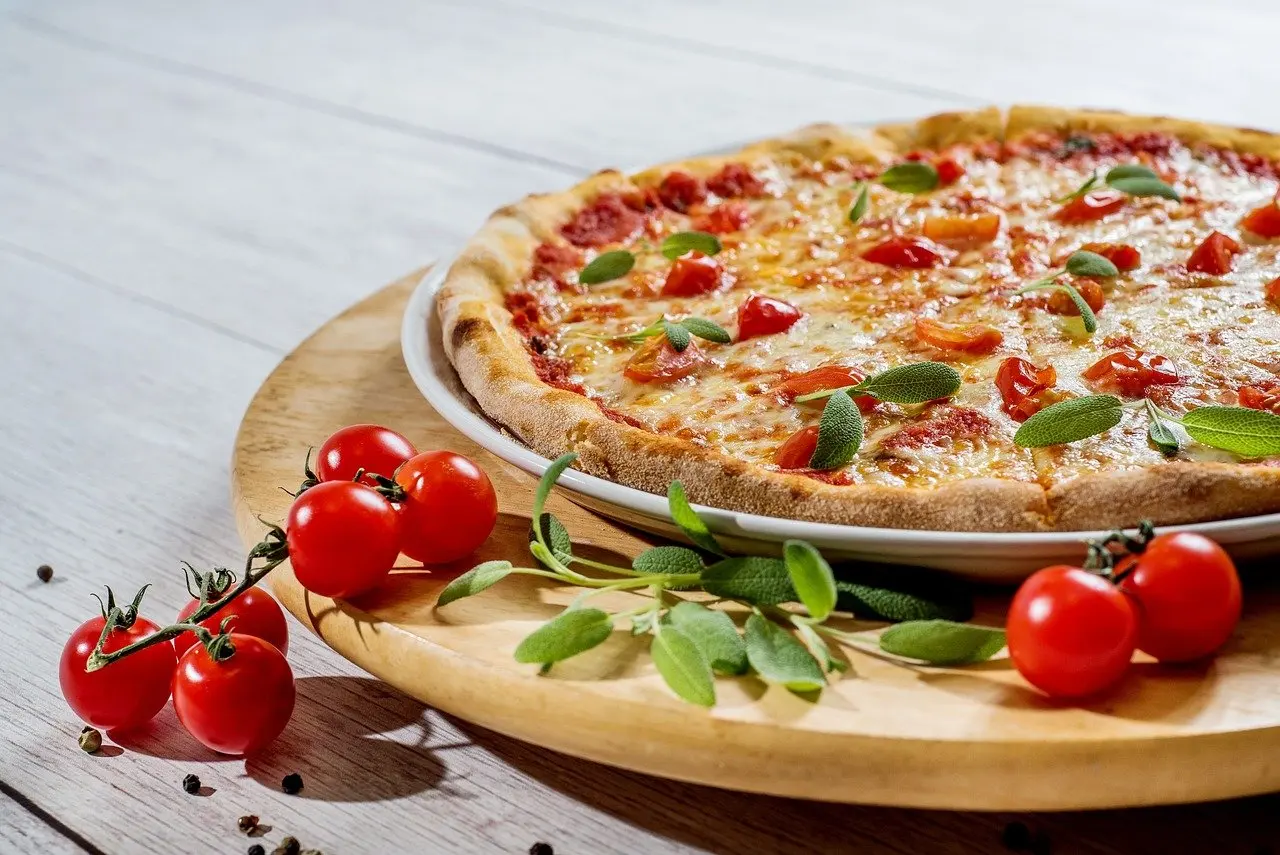
What wine goes with pizza depends first on the base. Tomato-sauced pizzas suit red or dry rosé wines with lively acidity, while a white pizza without red sauce suits Pinot Noir or Chardonnay. Cheese and meat then decide which red to choose.
| Situation | Pizza style | Wines listed | Planning use |
|---|---|---|---|
| Classic tomato and mozzarella | Margherita | Dry Grenache rosé, Chianti Classico, Valpolicella | Choose a red or dry rosé with freshness to match the tangy sauce. |
| Heavy meat toppings | Meat Lovers (meatballs, sausage, pepperoni) | Chianti | Pick a savoury Italian red when several meats share the pizza. |
| Spicy cured meat | Pepperoni | Sangiovese, Cabernet Franc, Syrah, Nebbiolo | Start with Sangiovese, then move to the other reds for a different style. |
| Bubbles at the table | Hawaiian | Slightly sparkling red Lambrusco | Choose a lightly fizzy red instead of a fully sparkling white. |
| No red sauce | White pizza | Pinot Noir, Chardonnay | With no tomato tang, choose the wine to suit the toppings. |
| Fresh and leafy | Salad pizza | Sauvignon Blanc, Verdejo, Grüner Veltliner | Keep to crisp whites when greens sit on top. |
These matches come from the International Wine and Food Society pizza pairing guide, with the Lambrusco suggestion taken from Benchmark Wines. For the principles behind these choices, see how to pair wine with food.
Start with the base, not the cheese
The pizza guide from My Wine Repository names the pizza base as the first variable in a pairing, and it splits the base into tomato or bianca, meaning without sauce. That split explains most of the advice in this guide. Benchmark Wines describes tomato sauce as tangy, so a tomato base asks the wine to handle that tang. A white pizza removes the sauce, so the wine no longer has to answer it.
- Tomato base: choose a wine that can hold its own against the sauce, which usually means a red or dry rosé with real freshness.
- Meat on top: keep the red, but pick one with enough character for cured or spiced meat.
- No sauce: the toppings and the crust set the direction, and the wine can be chosen to match them.
Use the base to narrow the list before looking at toppings. A tomato pizza with pepperoni makes two demands on the wine, the sauce’s tang and the meat’s spice. A plain white pizza makes fewer demands, so the choice can move toward the toppings and away from the sauce.
Classic tomato and mozzarella pizza
Margherita
Margherita is the plainest test of a pizza wine, because only tomato sauce, cheese and crust are in play. The International Wine and Food Society lists Chianti Classico and Valpolicella for it, alongside a dry Grenache rosé. Wine with Paige calls Valpolicella the perfect complement to a thin-crusted traditional Margherita.
Both Chianti Classico and Valpolicella are Italian reds listed for the same pizza, so a table that wants an Italian red has two options from that guide. Valpolicella is the one tied to a thin crust, which makes a thin, restrained Margherita its clearest fit.
Why tomato acidity matters
Benchmark Wines describes a basic cheese pizza as tangy tomato sauce with melty cheese, and that tang is the pairing factor that matters most here. The same source describes Sangiovese as having vibrant acidity and red fruit flavors, which is why it is the dependable starting grape for tomato-based pizza. A red with less acidity is a weaker match for that tang, because the wine can taste flat beside the sauce.
These are qualitative descriptions rather than measured values, so treat them as a starting point. When the sauce is the dominant flavour, a red with clear acidity is the safer choice, and a rich, soft red is better saved for pizzas where the toppings carry most of the weight.
Cheese-heavy pizzas
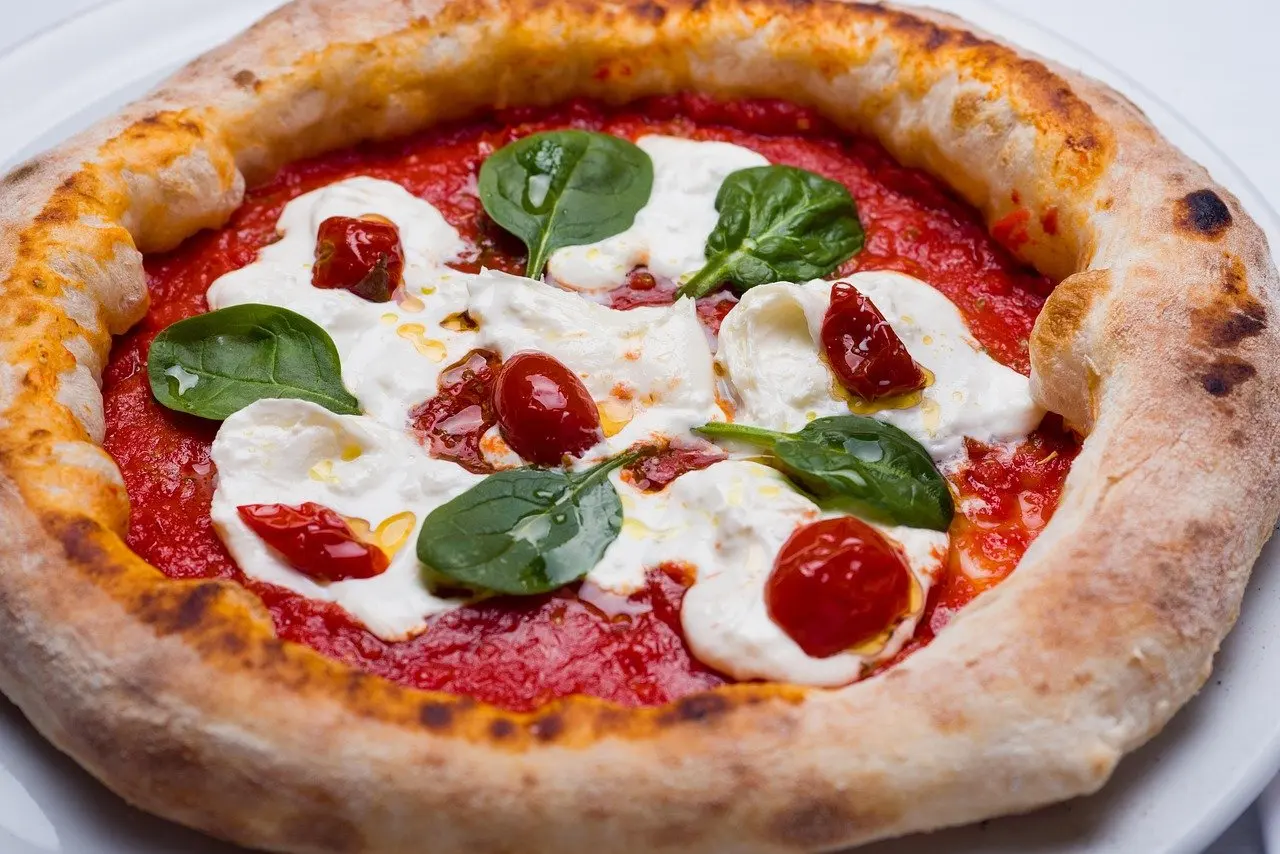
A four-cheese pizza built from mozzarella, fontina, Gorgonzola and Parmesan changes the question, because the cheeses now carry more of the flavour than the sauce. For that style, the logic in wine and cheese pairing is a better guide than the tomato rules above.
Loaded with meat
Pepperoni
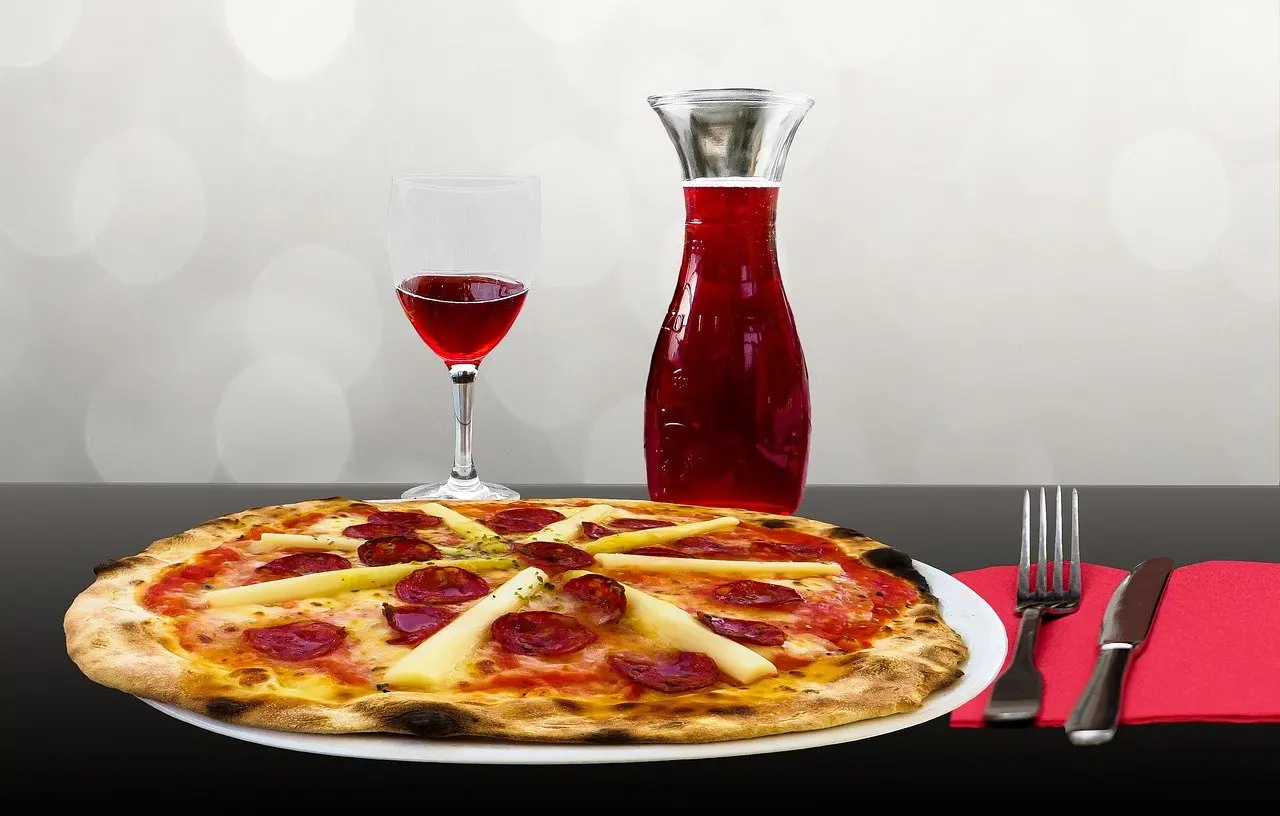
The International Wine and Food Society pairs pepperoni with Sangiovese, Cabernet Franc, Syrah and Nebbiolo. Sangiovese is the most practical choice on that list, because its vibrant acidity and red fruit also cope with the tomato sauce under the pepperoni. The other three suit drinkers who prefer a different red style, and they are worth trying when Sangiovese is not on the shelf.
Sausage, meatballs and mixed meats
For a Meat Lovers pizza with meatballs, sausage and pepperoni, the same guide names Chianti. A single savoury Italian red is the easier choice here. A pizza with several meats gives the wine a lot to answer, so one clear, savoury red keeps the table simple rather than splitting the bottle across several styles.
When you want bubbles
Slightly sparkling red with Hawaiian pizza
Sparkling wine works with pizza when the style is chosen with the topping in mind. Benchmark Wines suggests pairing Hawaiian pizza with a slightly sparkling red Lambrusco, which brings fizz to the table without moving away from red wine. This suits anyone who finds a fully sparkling white too sharp beside cheese and sauce.
Treat that as the clearest sparkling pizza match rather than a rule for every slice. For a pepperoni or Meat Lovers pizza, the red wines listed earlier have stronger backing in the guide, so keep the bubbles for pizzas where a lighter, fizzier wine makes sense.

White and vegetable pizzas
White pizza without tomato sauce
A white pizza without red sauce pairs with Pinot Noir or Chardonnay, according to the International Wine and Food Society. With no tomato tang to answer, the wine can be chosen for the toppings. Pinot Noir suits a drinker who wants red with a pizza that has no red sauce, and Chardonnay suits those who prefer white.
Salad pizza and crisp whites
The International Wine and Food Society pairs salad pizza with crisp white wines, so this is the one group in the guide where the advice points away from reds. Pizzas topped with fresh greens are better served by a white with crispness than by a red. For a pizza with seafood on top, the guide to the best wine with seafood covers that ground.
Frequently asked questions
| Question | Answer |
|---|---|
| Can rosé go with Margherita? | Yes. For Margherita, the International Wine and Food Society’s guide names a dry Grenache rosé, Chianti Classico and Valpolicella as options. |
| Is Zinfandel a sound alternative for pepperoni? | Wine with Paige matches Zinfandel to the slight spiciness of pepperoni and the full-flavored tomato sauce, so it is a reasonable option when Sangiovese is unavailable. |
| Which crisp whites are listed for salad pizza? | Sauvignon Blanc, Verdejo and Grüner Veltliner, as listed by the International Wine and Food Society. |